
By Daham Gunaratna – Founder & Managing Director, Lanka Property Web
Sri Lanka’s real estate market is witnessing growing interest in urban living and investment properties. As founder of Lanka Property Web, which marks its 20th anniversary next year, I have spent nearly two decades observing the evolution of the property market. Our platforms, LankaPropertyWeb.com and House.lk, cover different segments, from affordable housing to premium apartments. One clear trend as Colombo expands and buyer preferences change, is that apartments are becoming an increasingly important part of the residential landscape, with demand shaped by location, lifestyle, investment potential and the quality of development. This growing demand is reflected in a 15% price appreciation for apartments over a 12-month period, driven by both domestic buyers and international investors.
Sri Lanka needs to attract more foreign investments into the country for future growth and location is one of our strongest advantages. Situated in the Indian Ocean, with access to major shipping and air routes, the island has the potential to appeal to people looking for a residential base as well as businesses seeking a regional presence. Opportunities could extend beyond property ownership to back-office operations, outsourcing and other commercial activities that benefit from connectivity and a convenient time zone. One such initiative that is poised to take advantage of this is Port City Colombo, which could prove to be a beacon for a wider international audience. Its longer-term success in attracting investment will depend, however, on whether the promise is matched by a reliable and transparent operating environment.
When trying to attract investments – whether local or foreign, legal certainty is an important factor. A major part of this certainty comes from clear property rights. Freehold and leasehold ownership are established concepts in Sri Lanka, although buyers do not always understand how they operate in condominium developments. Freehold ownership generally provides enduring title to a property, while leasehold ownership grants rights over a defined period, commonly 99 years in long-term development arrangements.
Port City Colombo follows a similar model, with an important statutory distinction, that allows property investors in the development to benefit from the freehold title. Although the underlying land is held under a master lease arrangement, the legislation provides for residential condominium units to be transferred to buyers on a freehold basis. The Colombo Port City Economic Commission Act, No. 11 of 2021, sets out this framework. In fact, Section 38 clearly addresses the Commission’s powers concerning the leasing of land and the leasing or freehold transfer of condominium units standing on that land. Where the land is held under a master lease by the Project Company, the relevant arrangements involve the Commission and the Project Company. The distinction between the tenure of the underlying land and ownership of an individual apartment is central to understanding the arrangement.
The existence of a 99-year lease over the land does not, in itself, prevent a condominium unit from being transferred on a freehold basis under the applicable statutory provisions, with freehold title transferred to the buyer by the Commission jointly with the developer, under its authority derived from the Government of Sri Lanka.
As such, providing freehold ownership to condominium units on leasehold land is standard practice in existence in Sri Lanka as per the local laws. Similar ownership mechanisms exist in other Sri Lankan developments outside of Port City Colombo, although the precise legal arrangements vary from project to project.
Buyers should understand the title being offered and have the relevant documentation independently reviewed by their lawyers. We have been focusing on providing clear public communication about condominium ownership laws and help address misconceptions that can undermine confidence in the market.
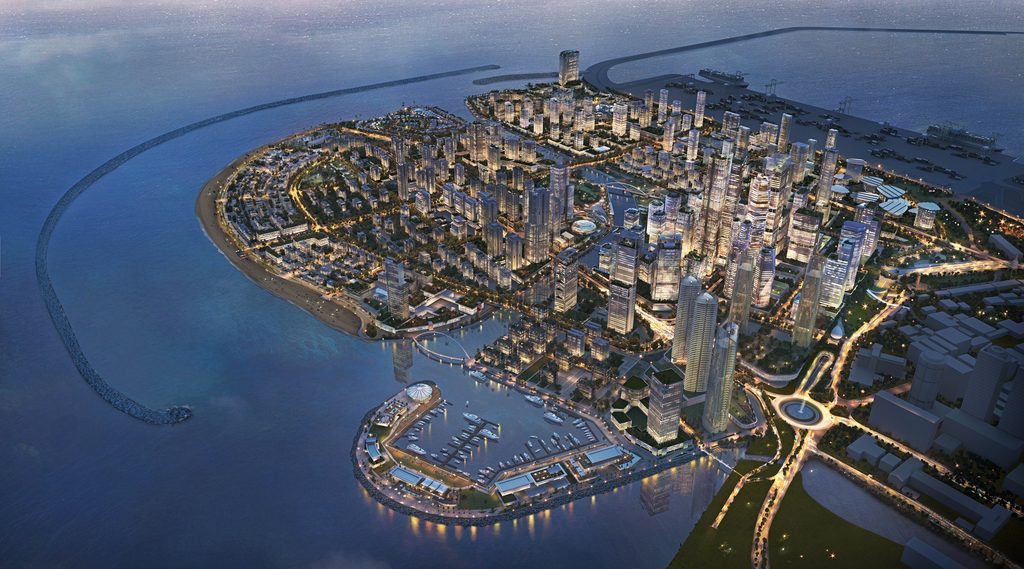
Port City Colombo’s foreign investment requirements also reflect its intended economic role. Under the applicable framework, developers must bring in the required construction capital from overseas in foreign currency to qualify for the relevant exemptions. At the same time, eligible residential units may also be purchased by local buyers in rupees. This arrangement can help developers address domestic demand while bringing foreign capital into Sri Lanka. Such inflows can support foreign currency availability and economic activity.
Traditionally, foreign buyers have accounted for around 10% to 15% of Sri Lanka’s property market, although much of this demand has come from expatriates. Purely foreign buyers account for a smaller share, estimated at around 5%, and apartments have been an important part of their interest. As website search traffic from key expat markets grew by up to 19% during 2026, clear opportunities remain to broaden this buyer base by aligning regulatory frameworks with international investor expectations.
What matters to a foreign investor, however, goes well beyond the property itself. Returns are important, but so is the confidence that an investment will remain secure over the next five, 10 or 20 years. Visa arrangements can also influence a decision, as it can the ease of travelling to the country and managing a property from overseas. The ability to bring money into Sri Lanka and repatriate returns through a clear, predictable process is another important consideration. If investors face cumbersome procedures or have to navigate an unnecessarily complicated set of requirements, some may decide that other markets are easier to enter. That’s where Port City Colombo comes in with its single window investment facilitation model that promises to streamline processes, while maintaining appropriate regulatory checks, that could result in being a meaningful differentiator.
Awareness is another factor. From our experience of marketing properties overseas, we often find that Sri Lanka itself must first be introduced as an investment destination. Port City Colombo has created another avenue through which Sri Lanka can reach overseas Sri Lankans and regional investors. The international marketing generated by the launch of these new projects has increased awareness among prospective buyers seeking a second home or an investment property, while attracting new audiences to the country’s real estate market who may not have otherwise considered investing.
Port City Colombo’s longer-term potential is another part of the investment proposition. Investors often look at emerging urban centres in terms of what they could become, rather than simply what is already there. Dubai is an example of how a city can evolve over several decades through sustained investment, infrastructure development and the arrival of businesses and residents. Port City Colombo is at a much earlier stage, and for investors willing to take a longer-term view, the possibility of participating in the development of a new urban and commercial destination is worth considering.
There is also a wider benefit for Sri Lanka. Investors and residents arriving in Port City Colombo will engage with the country beyond its boundaries, creating potential demand for hotels, restaurants, banks, transport providers, local retailers and artisans. In addition to generating employment opportunities and indirectly increasing government revenue through higher levels of consumption. The opportunity is therefore much grander and not confined to property sales.
As investment gathers pace, confidence will depend partly on the information available to buyers. Digitising the land registry and establishing accessible property transaction databases would be important steps forward. Condominium regulations should also be reviewed periodically to reflect changing market conditions, international practices and residents’ needs. Clearer condominium management legislation, informed by established overseas frameworks such as strata models, could strengthen condominium management and clarify owners’ rights and responsibilities.
As someone deeply passionate about real estate and an active stakeholder in the sector, I firmly believe it is time for Sri Lanka’s real estate market to extend its reach beyond our borders and establish itself as a compelling destination for international investors. Achieving this requires more than ambition. It calls for proactive policy dialogue, progressive reforms, promoting the country and the market to global investors, streamlined approval processes and a collective commitment to creating an investor-friendly environment.
Location has always been one of Sri Lanka’s greatest competitive advantages, and it is time we fully capitalised on it. A thriving real estate sector has the potential to be a powerful catalyst for broader economic growth, generating investment, employment, government revenue and positive spillover effects across the economy. The opportunity is before us; what matters now is our collective resolve to seize it.
• Freehold and leasehold are distinct: freehold gives enduring title, while leasehold grants rights for a defined period, commonly 99 years.
• Port City Colombo has its own legal framework. The Colombo Port City Economic Commission Act, No. 11 of 2021, allows residential condominium units to be transferred to buyers on a freehold basis, even though the underlying land is held under a 99-year master lease. Section 38 covers the Commission’s powers in this area.
• Freehold units on leasehold land are standard practice, but buyers should have their title documents independently reviewed by a lawyer.
• Foreign capital drives the investment model: developers must bring in construction capital from overseas in foreign currency, while eligible units can also be bought by locals in rupees.
• Confidence depends on transparency and reform, including a digitised land registry, accessible transaction databases and periodic review of condominium regulations.